


There’s something different about time in Mississippi.
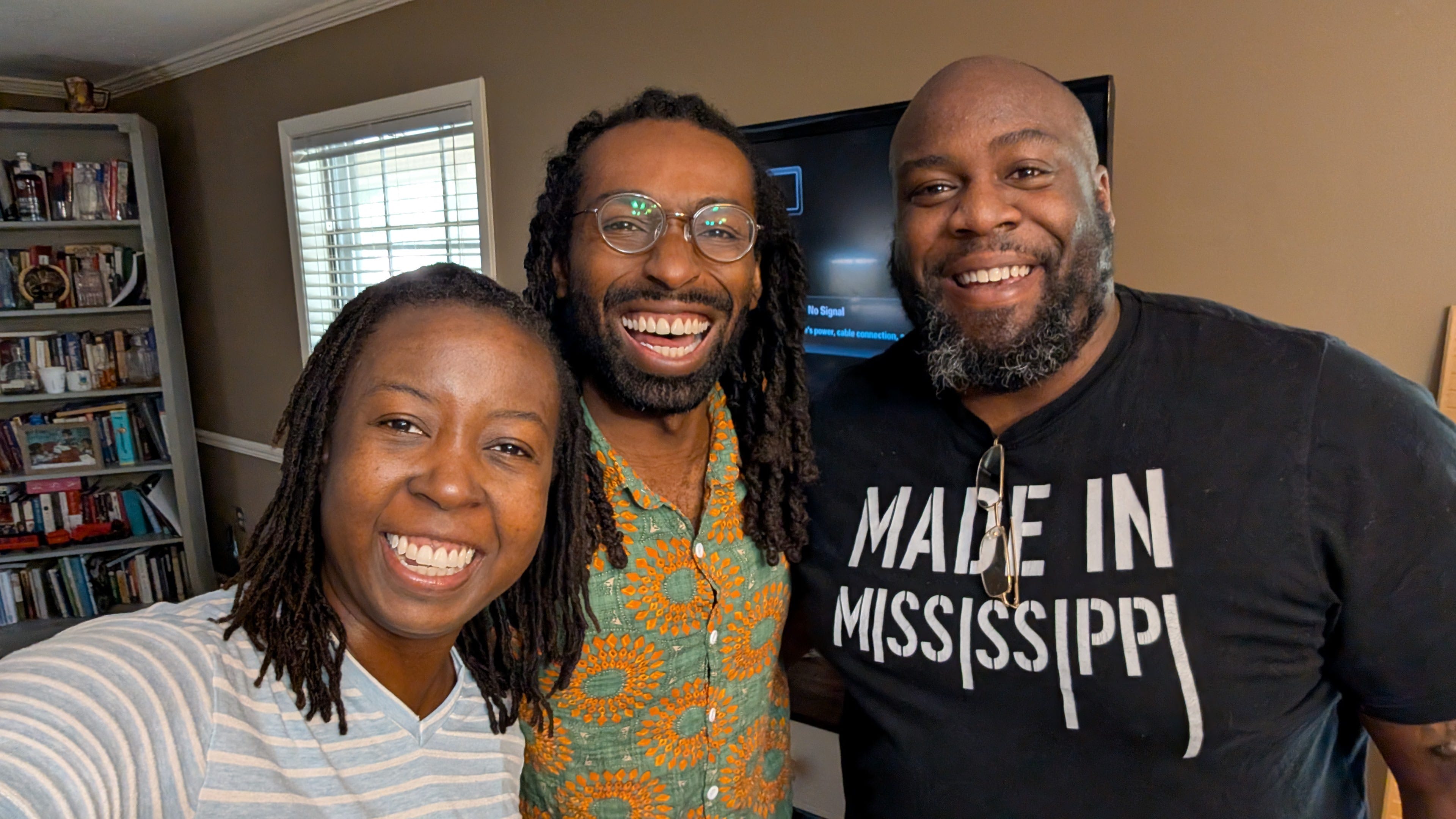
We didn’t notice it right away. At first, it felt like any other stop on our journey—beautiful land, rich history, the weight of stories we’ve carried in our bones. But as we spent time with DeSean and Alicia Dyson, something shifted. Kendall called it “Kairos time.”
You know how we often live by Chronos—clocks, calendars, the next thing on our to-do list? Kairos, by contrast, is about divine moments. Time measured not in hours but in meaning. And that’s what Mississippi gave us. We weren’t counting days anymore. We were counting moments.
One of the deepest lessons came just by witnessing how DeSean lives. His story is layered: health scares, job burnout, stress that showed up in his body. But instead of pushing through like so many of us are conditioned to do, he chose a different rhythm. He said no. He created boundaries. He decided his wellness mattered.
We kept laughing at his refrain—“Unless I’m getting paid for this, I’m not doing it.” And honestly? There was wisdom in it. In community development, in ministry, in nonprofit life, it’s easy to give all your energy away. But what if you could do this work on your own terms? What if freedom wasn’t just something we talked about but something we practiced with our calendars, our bodies, our lives?
Driving through Jackson, we could feel the layers of history in the streets. The city is one of the most densely populated Black cities in the U.S.—you feel that weight, that pride, that struggle. But we also saw the heartbreak. DeSean took us down Ferris Street, once a thriving Black Wall Street, now hollowed out and abandoned. It wasn’t destroyed by a highway like other Black districts. This one was decimated by the crack epidemic.
And that was no accident.
DeSean reminded us: oppression adapts. When one method of destruction loses force, another emerges—strategically placed drugs, underfunded schools, disinvestment. The pattern is familiar. The consequences, devastating.


But DeSean didn’t just show us what was lost. He brought us into his living story. His family history—his great-grandfather’s down payment on a foreclosed house, the school where he got into it with another student, the fence someone threw a BB gun over. We drove past his favorite fish fry spot and his old stomping grounds.
In many ways, he became both guide and historian—curating an experience that wasn’t just about seeing Jackson but feeling it.
And it was personal. Erin’s family roots are in Mississippi too—DeSoto County, Yalobusha County, Charleston. Standing on that land, she could feel the heaviness her ancestors fled. And while we didn’t get to explore the joy and beauty of the region as much on this trip (we said we’ll have to come back for part two), DeSean reminded us it’s there. In the friendships, the brilliance, the love.
One powerful moment was standing outside the Medgar Evers house. Though Evers was murdured by a Klan member, it brought into sharp focus how violence against Black leaders isn’t always as visible or traceable. Institutions and systems assassinate, too—not with bullets, but with neglect, exhaustion, and the slow grind of erasure.
It reminded us of our New Orleans reflection on invisible violence—the kind that doesn’t make headlines but leaves deep scars.
We talked about the enduring impact of higher education on Black families. For generations, it’s been “the way out.” A path to safety. To agency. To dreaming a bigger life. DeSean's own PhD journey helped demystify some of the process for us, and it also really encouraged Erin to hear him say she belonged in the same circle of smart thinkers he surrounds himself with. That meant a lot!
Still, the deeper we go, the more we recognize the paradox: institutions have caused so much harm, yet they remain necessary vehicles for communal healing, memory, and advancement. Especially HBCUs.
And maybe that’s what struck us most: the paradoxes. The way Mississippi holds both deep pain and deep love. As Nikki Giovanni once said, Black people’s ability to survive hasn’t been studied enough. Their ability to move from despair to joy, from oppression to brilliance, from survival to celebration—it’s astonishing.
We see it in the music. The art. The food. The way people still find ways to gather, to dance, to praise, to laugh. Like in Johnny T’s Bistro & Blues, where above the door hangs the famous ‘Sugar Shack’ portrait by Ernie Barnes—Black joy personified.


Before we left, we reflected on something from the prophet Jeremiah that Mark Charles shared at a conference we attended: “Build houses and settle down; plant gardens... seek the peace and prosperity of the city to which I have carried you into exile, for in its peace you will find your peace.”
He said that scripture belongs to African Americans. And we believe him. No one else knows exile—and the call to plant and build and thrive in spite of it—like we do.
So here we are, learning from Mississippi. From our ancestors. From the land. From the pain. From the joy. From the moments…in Kairos time.
Crossing Thresholds in DeSoto County, MS
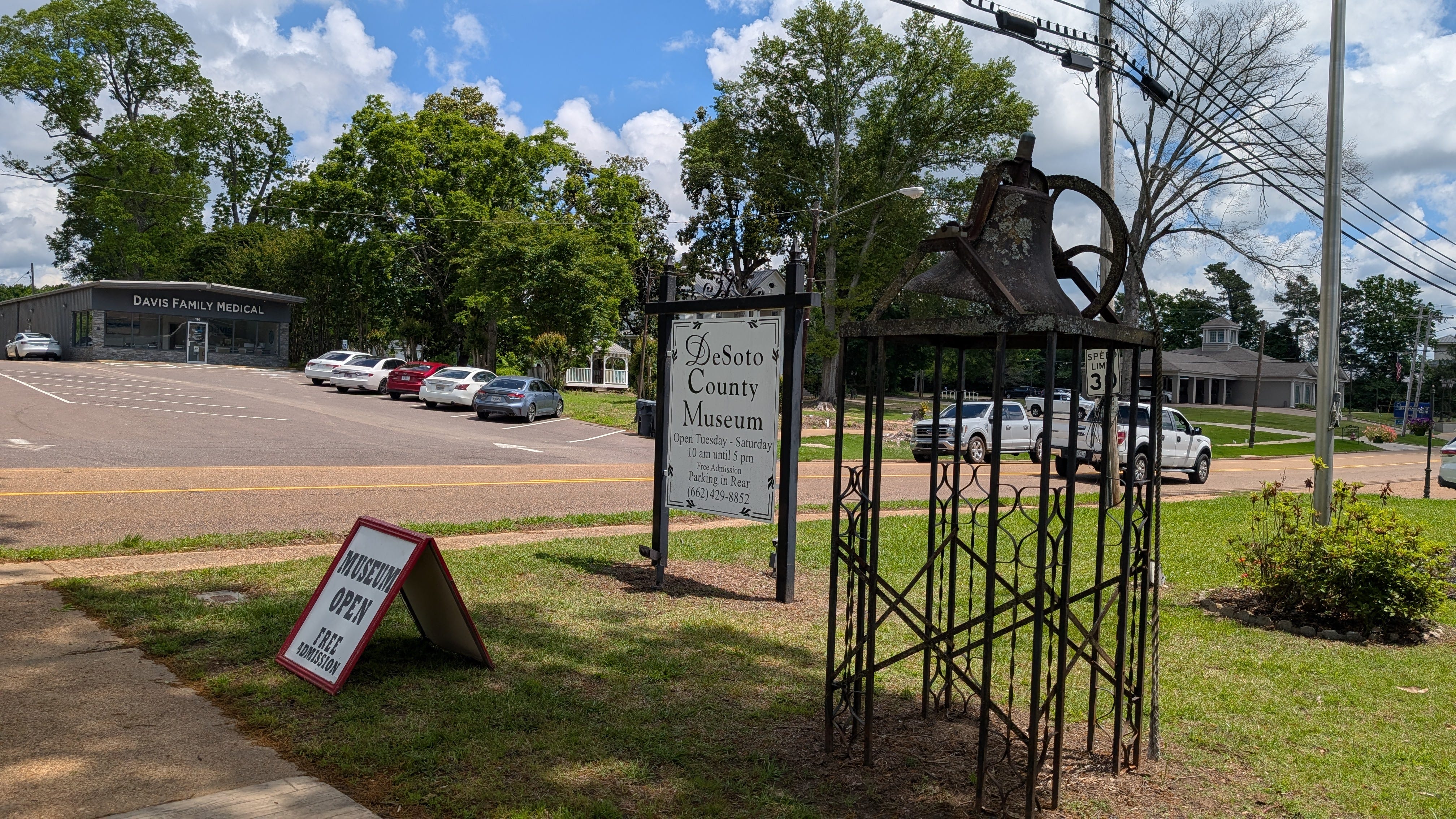
I (Erin) found the DeSoto County Museum near Charleston, Mississippi—the exact county my maternal grandmother and her family escaped from. I knew I had to stop by.
At first, I wasn’t sure if they would have much on the African American story. Their website focused heavily on Holocaust survivors who settled in the area. But when we opened the museum door and were greeted by a Black woman, I felt a glimmer of hope. Oh great, I thought. She’s going to know exactly what I’m looking for.
But what followed surprised us.
With warmth and certainty, she said, “There’s no comparison (to what Jewish people went through during the Holocaust)…African Americans came here to work.”
It stopped us in our tracks.
She wasn’t trying to be dismissive. In fact, she was repeating what she had likely been taught. But that moment revealed just how deeply historical narratives can be ransacked and reshaped—especially by the influence of Whiteness. And in this case, a Whiteness that once stood in solidarity with the oppressed, particularly in Jewish histories, now carries its own complicated legacy, as the state of Israel commits mass genocide in real time.
That’s not a comparison meant to dismiss anyone’s suffering. It’s an honest lament about how systems of power morph over time—and how people, even the most well-intentioned, can be used to uphold those systems without realizing it.
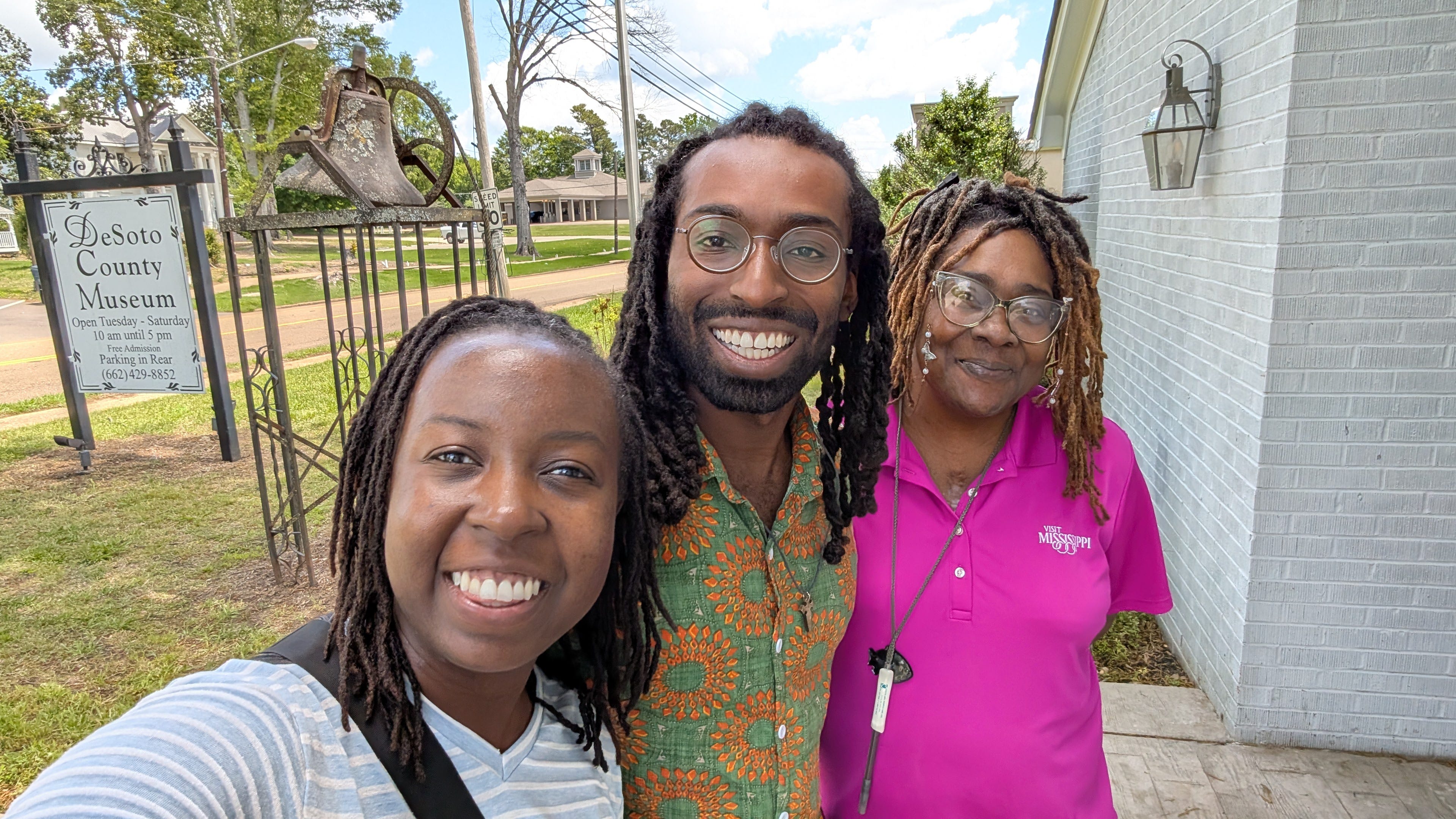
I didn’t realize it in the moment, but both Kendall and I were angry. Of course the Holocaust is real and horrifying, and we must all learn from it. But to imply that African American suffering cannot be compared—when the histories speak directly to one another—was a deep erasure.
The museum itself had very little information on African Americans in that exact county. Most of the exhibits were about White people and White history. There was barely anything on slavery, sharecropping, cotton picking—the very people who built that place.
Still, the little that was there stirred something in me. I saw a cotton bag like the one my Uncle Boosie probably used to pick cotton. I saw the very tools that were given to him to be enslaved—tools he eventually refused to use when he migrated to Chicago in the middle of the night. Seeing them made me feel both joy and rage, like a tornado of emotion had formed in my chest.


After the museum, we drove to E Oak Grove Rd, a street that, according to census records, was where my maternal grandmother once lived. We missed the first turn and ended up circling for 20 minutes before finding the exit. The route took us off the main highway and wound us around land my family likely worked, lived on, and tried desperately to leave behind.
I could hear my Uncle Boosie in my head: “You went back to DeSoto?! Baby, I don’t know why the hell you went back there. Ain’t nothing for us there, honey.”
And he was right. As soon as the construction truck in front of us turned off, we found ourselves more alone than ever—in a place my people fled. My body felt it. It said, We need to go. We passed a small store with Confederate flags for sale out front. It was enough.
Eventually, we made it to my Granny’s old street corner. Whatever they lived in was gone, replaced by newer ranch-style homes.
And then—just like when we crossed into Yalobusha County earlier—my mom called. She was on the phone telling us all about the new Pope, Leo XIV, who’s from Chicago—something she was really proud of. It didn’t hit me until later, but both times I crossed a threshold tied to my Granny’s story, my mom just happened to call.
I love my mom with all my heart. If she calls, I answer. But in a way, those phone calls felt like something divine. Like the Spirit made sure she was with me each time I crossed a significant line—literal and spiritual. I’m still holding the weight of that.
I don’t think I’ll go back to DeSoto County, at least not just to drive around. If I return, it’ll be on purpose. I’d need an appointment. I’d want to go with people who are also searching. The museum didn’t have the newspaper records I was hoping for. The woman told us we’d need to go to the courthouse—and that most of the documents are kept under lock and key.
Well, after our experience with her, there was no way in hell we were just going to “stumble” into the next place.