


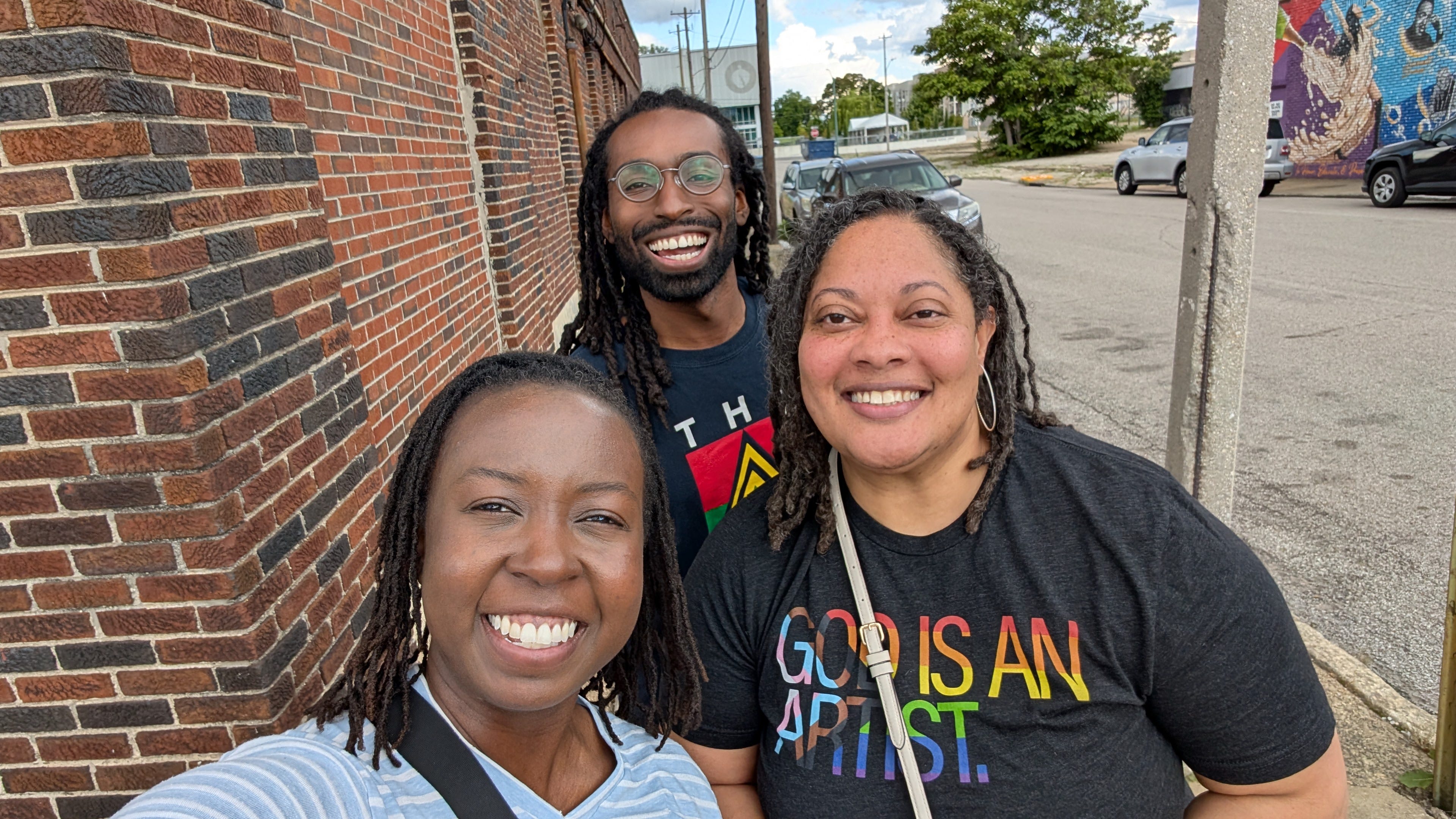
Memphis held us in a way we didn’t expect. We went to stay with Rev. Vahisha Hasan, someone we had only met once on Zoom!
Rev. Vahisha Hasan is a faith-rooted organizer, social impact strategist, and mental health practitioner working at the intersection of faith, justice, and wellness. An ordained minister at Christ Missionary Baptist Church in Memphis under Rev. Dr. Gina Stewart, Rev. Hasan holds dual master's degrees in Divinity and Mental Health Counseling. They are a powerful public speaker, co-editor of Building Up a New World, and creator of the Resipiscence Lenten devotional series, committed to healing and liberation through collective action.
When we arrived we didn’t know what to expect, but the moment we walked through her door, it felt like being welcomed by family. That one-night stay became one of the most comfortable, nourishing stops on our journey. But Memphis didn’t just offer us a place to rest. It offered us layers—of grief, joy, rage, healing, laughter, and learning.
What struck us first was how intentional people in Memphis are about joy. Not just the kind that happens spontaneously, but joy that’s cultivated on purpose. It’s a form of protest. We were reminded of a friend in Charlotte who said their organizing crew throws dance parties, drinks together, makes joy part of the rhythm. Rev. Vahisha and her people live that too. There was this ever-present reminder to celebrate the small wins, even when the world keeps telling you no.
We’ve both been told no so many times—by funders, gatekeepers, the systems we’re working against. And yet, what does it look like to treat a small yes like it matters? Maybe it means getting ice cream after we get a CCDA networking event confirmed. Maybe it means going out for dinner just because we made it through another week. Joy sustains us. It keeps us human.
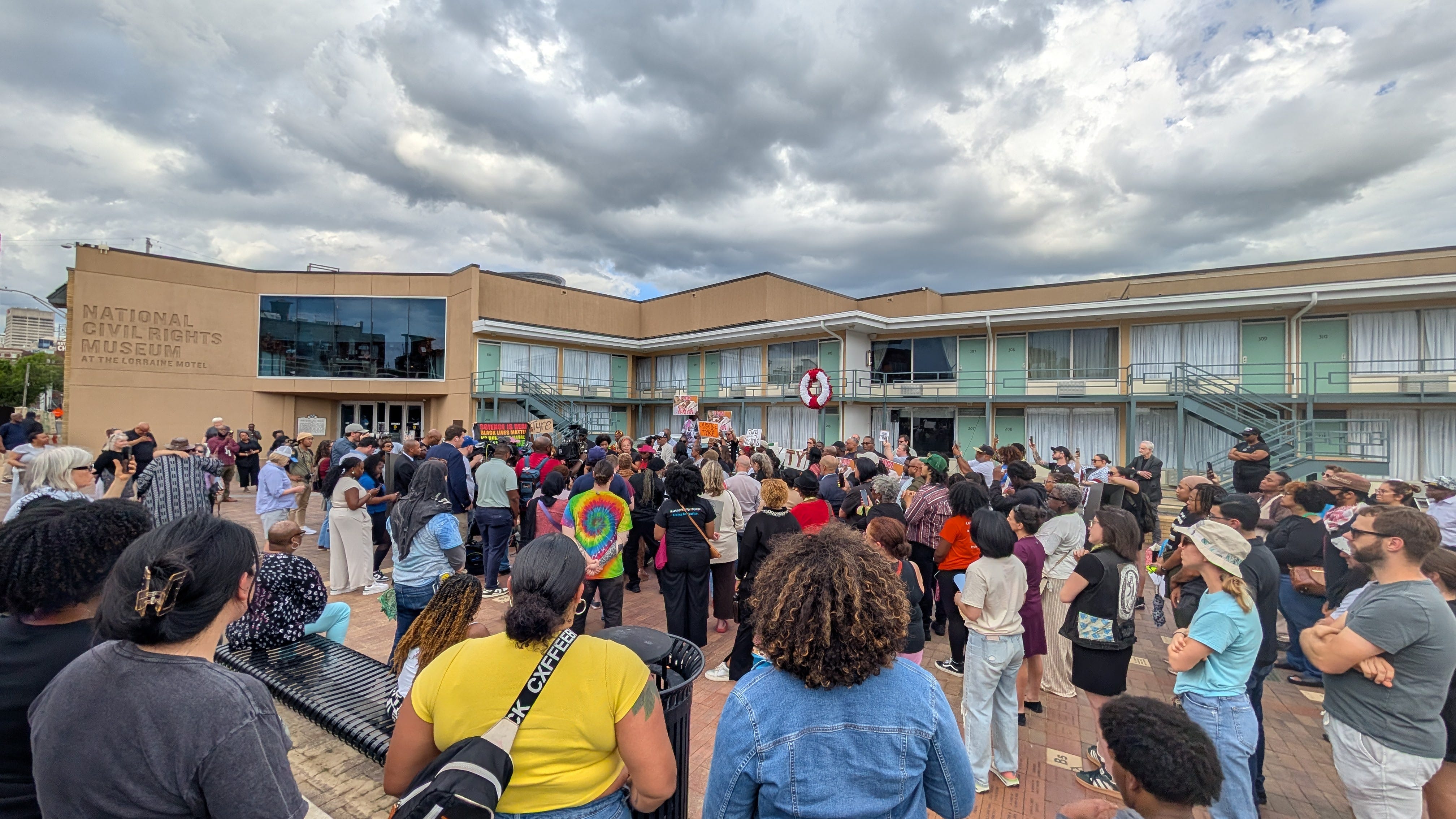
We stood outside the Lorraine Motel during a protest for Tyre Nichols. Dr. King was assassinated on that balcony in 1968. And now, all these years later, we were in the same place, mourning another Black man. Tyre was killed by Black officers under the violence of a white supremacist system. It wasn’t lost on us—the full-circle horror of it.
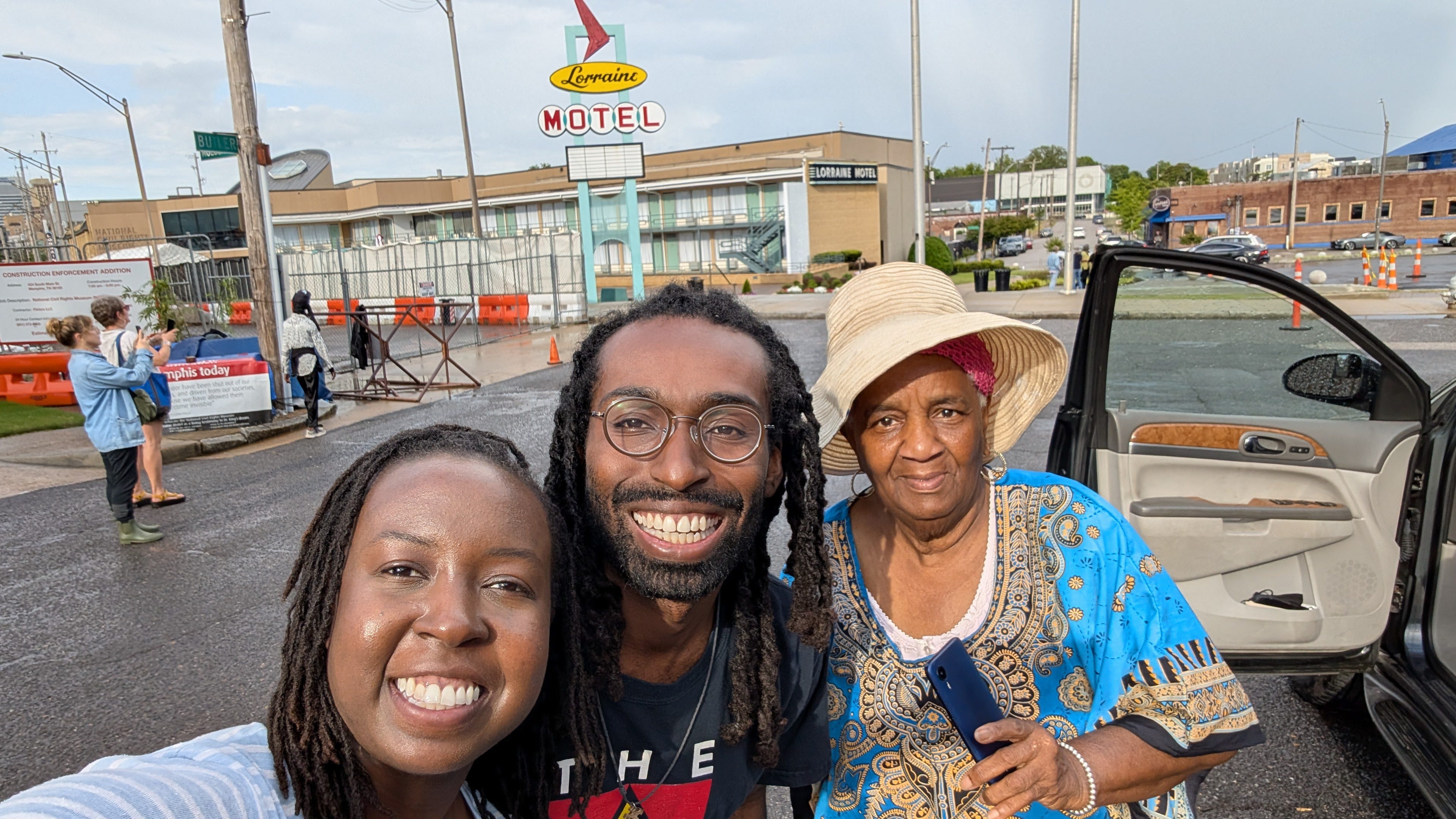
At one point, Kendall walked with Mama Jannie Foster, a community elder who shows up to everything. She had a bag she wanted to give to Tyre’s mom, and asked Kendall to help her deliver it. When they got to the mother, she assumed Kendall was with Mama Jannie and gave him a hug too. It was overwhelming. Here was an elder who had likely lived through Dr. King’s assassination, now comforting another mother grieving her son. It felt like a Kairos moment—time collapsing.
We kept thinking about the blood in the soil. That idea from Genesis, where Abel’s blood cries out. What does the soil of Memphis carry? What is it saying? When we stood on that ground, we kept wondering if the earth remembered. If MLK’s spirit lingered. If the weight of Tyre’s death added another cry to the chorus.
It felt surreal. We grew up reading about this in textbooks. We never thought we’d be there. Never imagined we’d stand in that exact spot. We feel like we’re still catching up to it emotionally—like our souls are behind our bodies, trying to make sense of everything they’re seeing.
After being called by the community to serve as head marshal for the march, Rev. Vahisha turned to us and handed over her keys. She showed us the number she had written in ink on her arm. “If I get arrested, here’s who to call,” she said. It was such a raw, matter-of-fact moment. We were just beginning to follow her lead, and suddenly, we were in the thick of real-deal organizing.
We remember thinking, wait, what do you mean if you don’t come back? What do you mean if you go to jail? It was one of those moments where the veil drops. Memphis don’t play!
And yet, in the middle of all that, Memphis held us with such tenderness. There was a person in a restaurant telling us, “People here will give you the shirt off their back, and mean it.”
And then there was Mama Jannie again. She tried so hard to convince us to ditch everyone else and go out to eat with her. “Y’all sure?” she kept asking. When we finally said no, she just stared forward and waved us off like, “Forget y’all then!” We were cracking up. That kind of humor and persistence—that’s family. That’s Southern auntie energy.
We also learned about Robert Reed Church, one of the South’s first Black millionaires, who reinvested in Memphis by building what white society denied Black people: parks, businesses, hospitals, homes. He reclaimed space. And that legacy speaks directly to the call we feel now.
Rev. Vahisha’s late grandmother said something that’s been sitting with us: Until Black people own at the industry level, we will never be free. It’s about liberation from systems that never saw us as fully human.
In Memphis, we further witnessed how people in queer and gender-expansive communities show up. How they introduce themselves, how they navigate identity and safety, how they decide when and if to correct someone—that taught us so much. There’s courage in that. There’s grace, too.
We didn’t get to the barbecue or the live music this time, but we’ll be back. However, the food we did have…babyyyyy! We also experienced something deeper: a community that holds both the wound and the balm.
Memphis showed us how to laugh and grieve in the same breath. How to dance and protest, feed and protect, hold and release. It reminded us that every step we take on this journey is layered with the steps of those who came before.
The soil remembers.
And we’re still here…so let’s be together and celebrate!


Lastly, my paternal grandmother, Glenola Lashley (who also went by the last names Carr and Boone), was born in South Memphis — 1302 Adelaide Street to be exact! And just minutes ago, I found out that my maternal great-grandfather, who was a twin, was also from Memphis! I had no idea Memphis was so close to both Arkansas and Mississippi—just a couple of short bridges away on the River Walk. Although the house where she was born no longer stands, it was surreal to return to that place and imagine her home birth with a doula happening right there. It felt like an out-of-body experience. Visiting all these deeply significant places left me feeling a bit ungrounded—like my body could sense that these spaces are alive, speaking. And if you got still enough, you might even hear them talk. At times, it felt eerie, a little trippy, but also sacred. The present moment was colliding with the past, and I felt an embodied awareness of those who came before—how their lives are essential to our own growth. Honestly, if my grandmother hadn’t been born in that exact spot, I wouldn’t have been able to stand there in that moment. It’s wild to think about, but it’s absolutely true: this moment wouldn’t exist if someone decades ago hadn’t existed first.


If you’ve been wanting to give to our work with BLK South, now is the perfect time! A generous anonymous donor has offered a $25,000 matching gift to help us meet our needs for the remainder of the year. Every dollar given between now and May 12th will be doubled! Click here to donate.