


By Kendall Dooley, Co-Founder, BLK South
blksouth.org | @blksouth
From 1910 to 1970, over six million African Americans migrated from the American South to urban centers in the North and West. This historic movement—known as the Great Migration—was fueled by a range of motivations: many were fleeing racial terror, others were forcibly displaced, and still others were chasing the promise of a better life, often framed as the “American Dream.”
The four-part documentary The Great Migration, hosted by Henry Louis Gates Jr., powerfully captures this exodus. In it, Gates highlights the soulful classic “Midnight Train to Georgia” by Gladys Knight and the Pips—a song that tells the story of a man who leaves the West, disillusioned, to return to the South after failing to make it in Los Angeles:
He's leaving (leaving)
On that midnight train to Georgia (leaving on a midnight train)...
Said he's going back (going back to find)
To a simpler place and time...
He kept dreaming
That someday he'd be a star (A superstar, but he didn't get far)
But he sure found out the hard way
That dreams don't always come true...
Just like the man in this song, for many people of color, the American Dream was not only unrealized—it was, and often remains, fundamentally unattainable.
The phrase “American Dream” was coined by American historian James Truslow Adams in his 1931 book The Epic of America. Adams defined it as a land where life should be better, richer, and fuller for everyone, with opportunity available according to individual ability and achievement. His vision was rooted in Enlightenment ideals that also informed the Declaration of Independence—principles like “all men are created equal” and endowed with the inalienable rights to “life, liberty, and the pursuit of happiness.”
Yet, from Frederick Douglass to the leaders of the Civil Rights Movement, African Americans have continuously challenged America to live up to these ideals. In his famous 1852 speech “What to the Slave is the Fourth of July?”, Douglass exposed the glaring contradiction between American values and the reality of slavery and racial injustice.
Decades later, civil rights leaders continued this prophetic critique. One such leader, theologian and mystic Howard Thurman, described segregation not merely as separation, but as a spiritual and social crime that stunted the potential of Black people and all people of color. His biographer, Dr. Peter Eisenstadt, notes that to Thurman, segregation was a mechanism that limited Black possibility. Limits were put on where people of color could live, work, study, and worship. These policies confined not only opportunity but the very imagination of who one could become.
Systemic racism—including redlining, urban renewal, unfair lending, and other discriminatory practices—has historically played a major role in barring Black Americans from full participation in the American Dream. Over time, the Dream itself has also shifted—from Adams’ vision of equality and opportunity to a more consumerist one rooted in material wealth, homeownership, and suburban stability.
Despite these hurdles, Black Americans have continued to pursue education and success, often as acts of resistance and hope. My father, for instance, attended North Carolina State University in the 1980s, during a time of newly desegregated education.
But a few years ago, my father shared with me what that “dream” cost him. In corporate spaces, he felt he had to remain silent—assimilate into white American culture, mask parts of his identity, and carry the weight of isolation. His reflections have inspired him to begin writing a book titled Silent Black Man, detailing how often Black men must mute themselves to survive in white-dominated professional environments.
This phenomenon aligns with the sociological concept of social death. Social death describes when an individual is disintegrated from their social group as if they are dead or nonexistent. For many people of color who choose to remain and express their cultural identity and true selves, they face a social death in majority white American spaces, and because white Americans hold much of the economic wealth and power in the country this leads to a hindrance in social mobility. Even when people of color “make it,” they frequently do so by sacrificing pieces of their identity. That’s not freedom—it’s a subtle form of erasure.
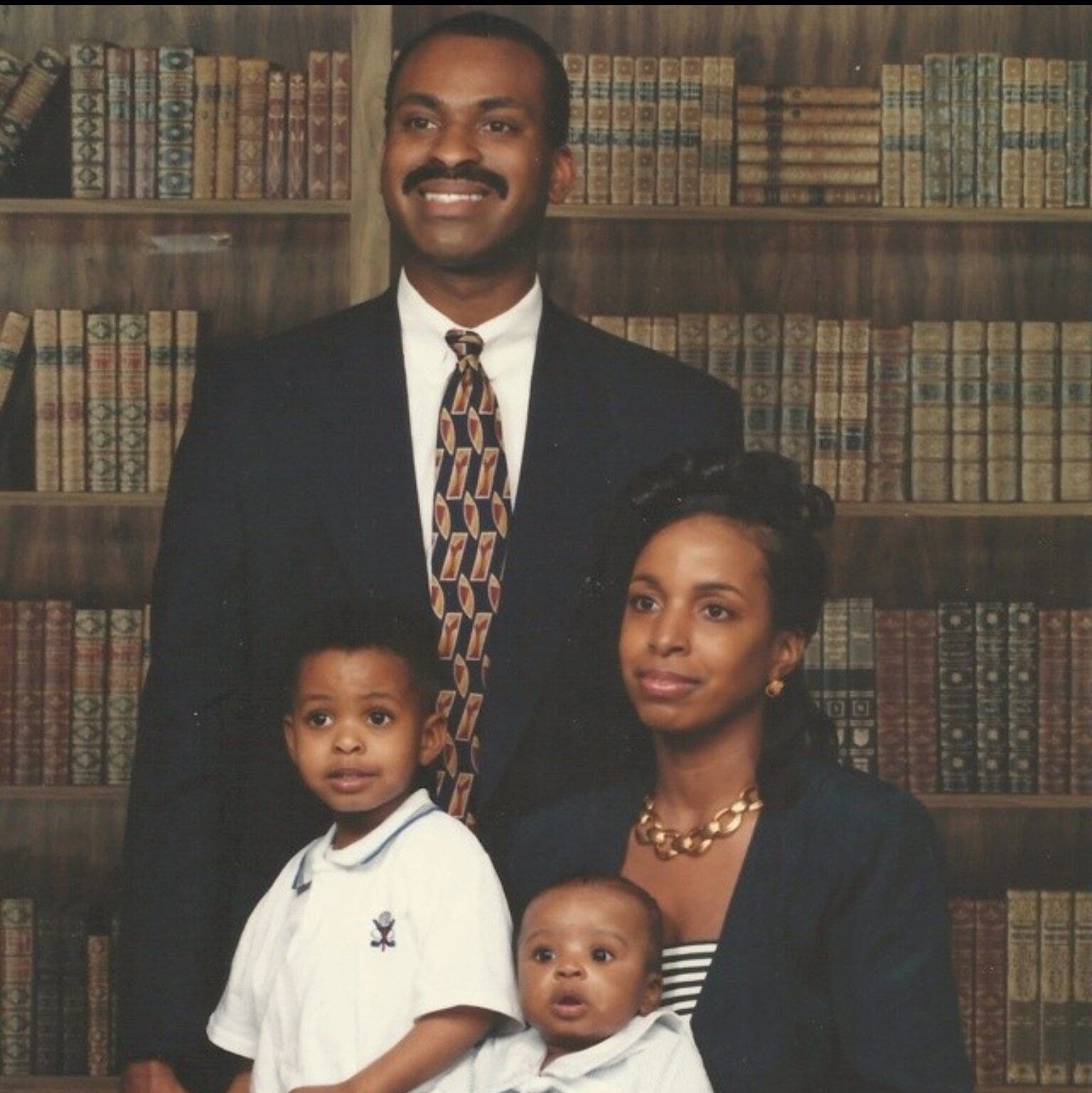
With perseverance, he earned a degree, married my mother, moved to the suburbs, and worked in corporate America—by many accounts, achieving the current definition of the American Dream. My brother and I grew up with the comfort, stability, and opportunity my father worked so hard to provide.
Which raises the question: Was the American Dream ever truly meant for all? Or perhaps the Dream is a myth—one that demands conformity and self-denial from everyone, including white Americans who trade authenticity for acceptance in a system that values wealth over humanity.
Or maybe, the American Dream is a living document—not a fixed destination, but an evolving vision shaped by the moral imagination of those willing to reimagine it.
I don't yet know what the American Dream ought to be. But I know this: both its original ideals of liberty and equality, and its modern iteration of financial comfort, have remained distant for far too many people of color. Systemic racism continues to push the goal post and lead to forced assimilation and cultural erasure. It is time for us to reimagine the American Dream.
If you’ve been wanting to give to our work with BLK South, now is the perfect time! A generous anonymous donor has offered a $25,000 matching gift to help us meet our needs for the remainder of the year. Every dollar given between now and May 12th will be doubled! (Giving link in the comments).
Reflection Questions
What parts of the American Dream have you had to sacrifice—or feel pressured to sacrifice—in order to succeed or belong?
How has that shaped your understanding of freedom?
If we reimagined the American Dream through the lens of those historically excluded from it, what new values, practices, or visions might emerge for our communities and nation?
Final Reflection
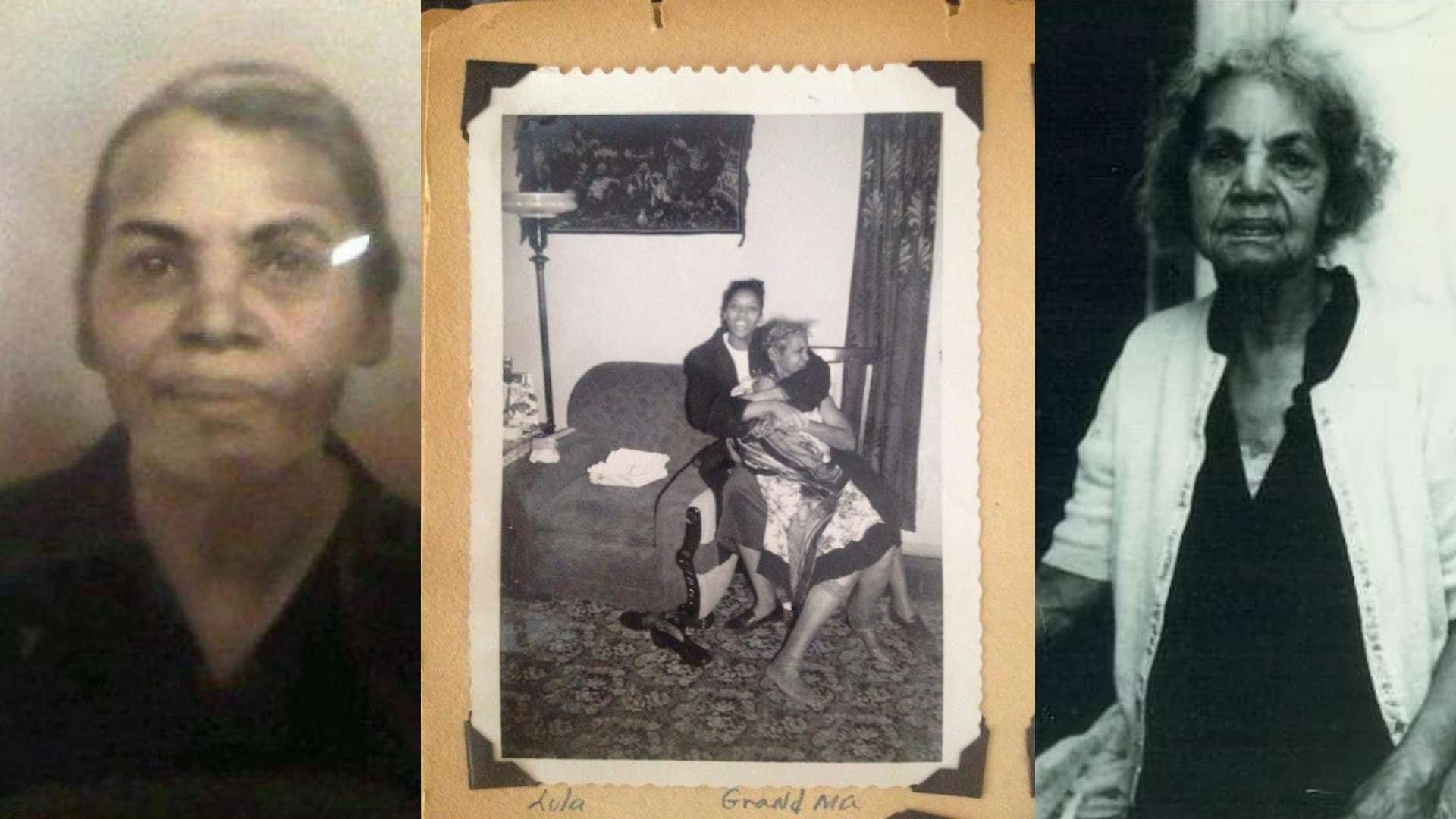
That’s why my wife and I are reverse migrating—returning to the South, to Durham, North Carolina, to the very neighborhood where Fannie Latta once lived. Through our nonprofit, BLK South, we aim to invest in community development, healing, and renewal across historically Black neighborhoods like Hayti. We are not coming to save, but to learn. To serve. To grow in our cultural heritage and listen to those who stayed, endured, and bore witness to a Dream that benefitted some while costing others everything.
Their stories and their wisdom will help shape a new vision of the American Dream—one authored by those most impacted by its broken promises. I suspect it will be a Dream harder to achieve, but more beautiful, more just, and more inclusive than any we’ve known.
As Howard Thurman understood it in his time:
The American Dream is not based on what America was, or is, but on what the “possibility of a freedom under God is, the crown that He holds steadily over our heads with the hope that as a nation we grow tall enough to wear it.”
May we all pray with our hands and feet that we grow tall enough to wear that crown.
References
Adams, James Truslow. The Epic of America. Boston: Little, Brown, and Company, 1931.
Eisenstadt, Peter. Against the Hounds of Hell: A Life of Howard Thurman. Charlottesville: University of Virginia Press, 2021.
Gates Jr., Henry Louis. Great Migrations: A People on the Move. PBS. Retrieved from: PBS
Bull City 150. What is Bull City 150? Retrieved from: Bull City 150
Králová, Jana. “What is Social Death?” Contemporary Social Science, vol. 10, no. 3, 2015, pp. 235–248. DOI: 10.1080/21582041.2015.1114407
Profound read — how much of ourselves do we lose in the (forced) assimilation that we know as the American Dream? Esp in places like the South. Wishing yall many blessings and divine openings on your journey down. ♾️